

Why It’s Possible, Why It Matters, and How to Do It with Confidence
Many families begin their pregnancies following the “default” model of care, usually with an obstetrician in a hospital setting, supported by what insurance covers, and shaped by a cultural expectation that this is just how births happens. For first‑time parents especially, the journey of pregnancy and early motherhood can feel overwhelming, and many don’t deeply consider what is important to them until after they’ve been swept into routine appointments, timelines, and protocols.
But something often changes along the way.
Maybe you started to feel that your prenatal visits were too rushed. Maybe you wanted more time to ask questions about your body or to explore your hopes or fears about the birth. Maybe a past birth left you knowing specifically what you do or don’t want this time around. Or maybe you simply imagined pregnancy and birth differently than what was unfolding.
Whatever the reason, it’s absolutely okay to change your mind. It actually happens all the time.
You don’t have to wait until the beginning of your next pregnancy or have every detail figured out to make a change. In fact, many families switch to a birth center partway through their pregnancy, sometimes even in the third trimester.
One of the biggest myths we hear is that families must have everything figured out before switching to midwifery care or to a birth center setting.
That’s simply not true.
You don’t need to have it all figured out.
You don’t need a complete birth plan.
You don’t even need to know exactly what questions to ask.
What matters most is a curiosity about a different, more personalized experience and a sense that you want care rooted in connection, not just routine. That’s it.
Why Families Choose Birth Center Care in Mid‑Pregnancy
There are many reasons families decide to switch to birth center care partway through pregnancy, and they’re as varied as the families themselves. Here are some of the most common themes we hear:
1. They Want More Time and Presence
Doctor appointments can feel rushed, full of checklists and quick questions. Visits with a licensed midwife, on the other hand, feel leisurely, supportive, and collaborative. When you’re truly heard, it can shift the entire experience of pregnancy.
2. They Want to Know Who Will Be at Their Birth
Instead of seeing rotating providers, you build a real, trusting relationship with the same licensed midwife throughout your care. That continuity – knowing the person who will be there with you – is a powerful source of confidence and calm. This can actually affect the balance of hormones during labor and allow for a smoother birth.
3. They Want Freedom and Comfort
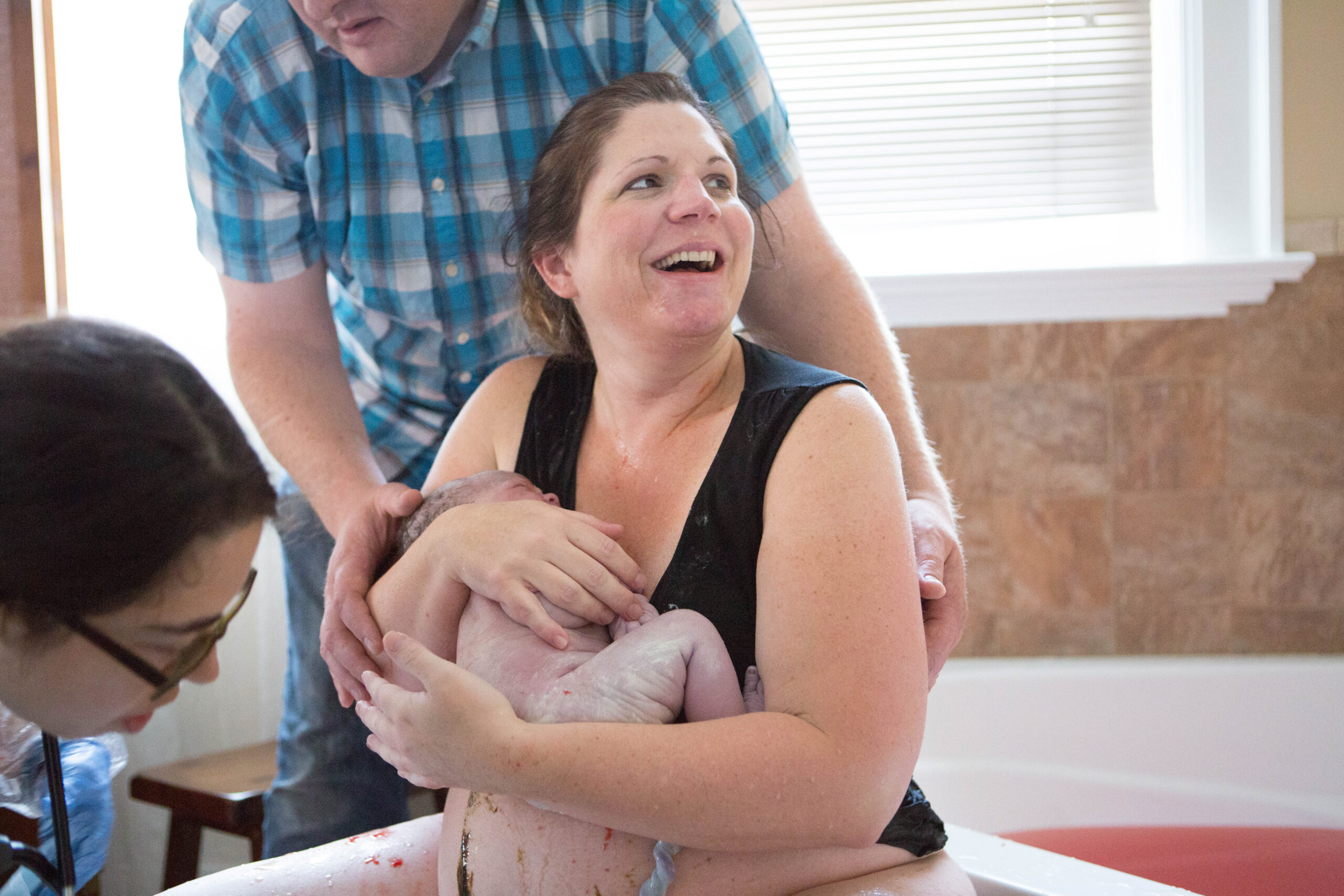
Birth centers support movement, choice of positions, water and gravity tools, nitrous oxide if desired, and a calm, peaceful environment. You’re encouraged to find what feels right for your body, not to fit into a protocol.
4. They Want Less Intervention
Birth centers do not perform routine inductions. Their goal is to support your physiology unless intervention is medically necessary. They can assess your baby’s wellbeing (by doing non-stress tests and ordering an ultrasound to check amniotic fluid levels and other markers) and if all is well, patience is often more appropriate and evidence based than inductions. For many families, that aligns more with how they want their labor to unfold.
5. They Want to Preserve the Intimacy of Birth and Postpartum
Birth center care values the natural flow of bonding in the hours after birth, not a rushed exit from the room or an unnecessary protocol that interrupts your family’s first moments together.

It’s Not Too Late to Choose Differently
Here’s a truth many people don’t realize:
You are allowed to change your mind.
You are allowed to want a different experience.
You are allowed to seek a deeper connection with your care provider.
Choosing a birth center partway through your pregnancy is not a failure. It’s an intentional decision rooted in wanting care that feels more personal, more respectful, and more aligned with your body and your intuition.
It’s a response to your growth, your evolving preferences, and a clarification of how you want to experience birth, even if that revelation comes later in your pregnancy.
Many people describe this shift as moving from being carried by a system to engaging in the experience, a midwife who knows you, supports your physiology, and honors your voice.
What the Transition Actually Looks Like
Switching to a birth center or to midwifery care is not complicated. Here’s how it typically unfolds:
Reach Out to a Midwifery Practice or the Birth Center
Simply call or email to express your interest. That’s all.
Schedule a Consultation
All the midwives offer free consultation visits so you can meet, ask questions, and share your story. This visit is about connection, not commitment.
Review Your Health History and Preferences
During your consultation, you’ll talk about what you want, what you’re worried about, and what you’ve learned so far in your pregnancy. With your permission we can access your prenatal records and review labs and imaging to confirm that the pregnancy is low-risk.
Decide Together if It’s a Good Fit
If you and the midwife feel aligned, you can choose to transfer your care to that midwifery practice.
And that’s really it. There’s no stigma, no punishment for “changing your mind,” and no deadline by which this must be done. Midwives are experienced in supporting families exactly where they are, even if that’s partway through the pregnancy.
Choosing to switch to a birth center partway through your pregnancy isn’t “starting over.” It’s reclaiming your experience. It’s choosing connection over routine, presence over protocol, and relationship over anonymity.
If your heart is whispering “there’s another way,” we think that voice is worth listening to.
You don’t need to know everything. You just need to be willing to explore.
And we’re here to walk with you, wherever you are in your process.