
At Bellingham Birth Center, we believe something powerful happens when you’re cared for by the same one or two people throughout your pregnancy, birth, and postpartum journey. It’s called continuity of care, and it’s not just a nice idea, it’s a key element of safer, more satisfying birth experiences.

What Is Continuity of Care?
Continuity of care means that the same midwife (or if you’re working with a partnership, it would be your two midwives) provide your care throughout your entire journey with us.
Rather than being seen by a rotating staff of many, or opening yourself up to the risk of having a stranger attend your birth, working with a licensed midwife means being truly seen and known by the provider you chose, the one you interviewed, the one you connected with on a deeper level. More and more families are finding that knowing who will answer their call when they find themselves in labor ~ being able to imagine their birth happening with the guidance of a specific, trusted person ~ brings a sweetness to their anticipation and eases their worry.
At Bellingham Birth Center, that relationship begins during prenatal visits and continues through labor, birth, and 6 weeks of postpartum recovery. Most of the midwives privileged to attend births here also serve home birth clients. They choose to offer births at our homey facility as a way to provide more options to families in our community, bringing their grounded, deeply personal care into a space that feels safe, sacred, and supported.
Birth isn’t just physical. It’s a deeply emotional, and sometimes spiritual undertaking. Maybe you’ve heard about how some mammals’ labors will stop if they are startled or scared. This is because the neurotransmitters of fear counteract those of birth: adrenaline blocks oxytocin.
If you’re a mama zebra in labor who is discovered by a predator, this is a very good adaptation. It allows you to possibly escape before your vulnerable baby is born.
Being around strangers in an unfamiliar environment can feel alarming and scary for some people. Much of what we do at Bellingham Birth Center is with this basic fact about birth in mind. We do whatever we can to reduce unnecessary friction and disruption during your labor.
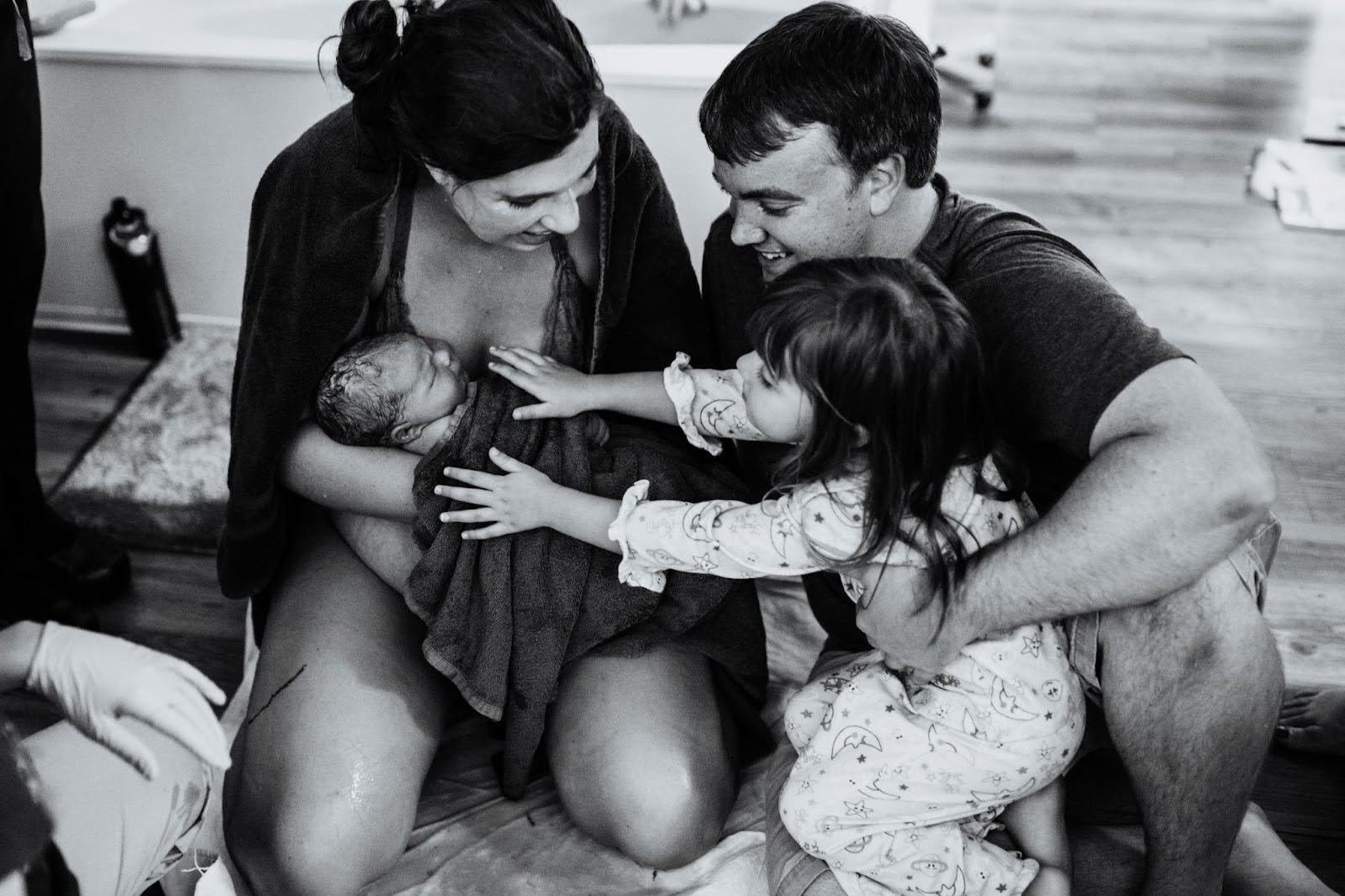
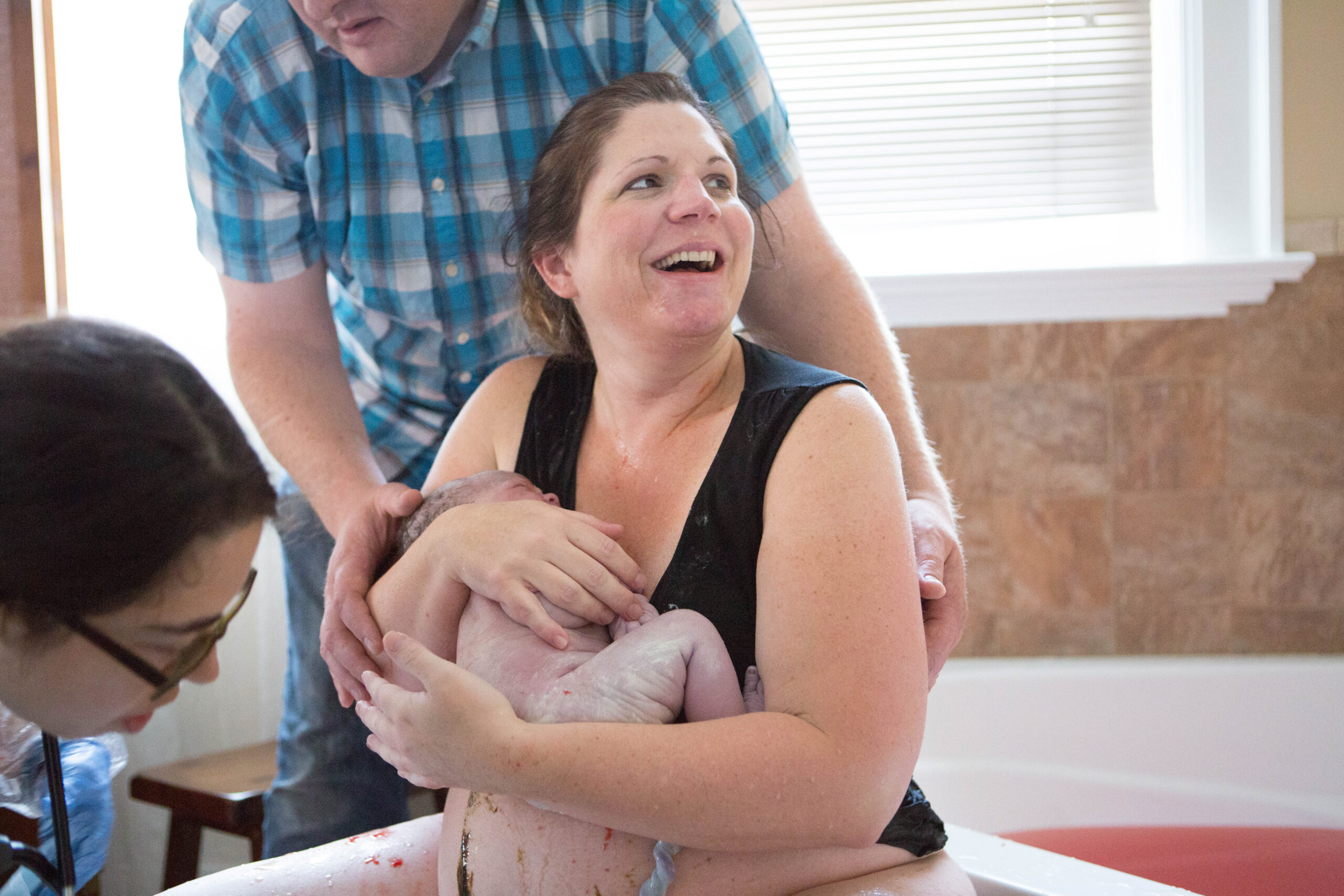
Being cared for by someone who has walked with you through the highs and lows of pregnancy can make all the difference when you’re in labor. It can truly change the way you birth. When you feel emotionally supported, your body feels safer to open and do what it’s built to do.
When you can relax into the process of birth because you feel that deep sense of safety and trust, physiologically your nervous system can function better, and that can allow labor to function better.
Why That Deep Connection Builds Safety
When your provider truly knows you as a person – your hopes, your worries, and also your medical history – it adds a layer of safety to your care that goes far deeper than any checklist ever could. The likelihood of a medical error is extremely low because we have the time to really know what’s going on with you.
In a moment as vulnerable and powerful as giving birth, trusting your provider matters. That trust is built when you don’t have to reintroduce yourself at every appointment or repeat your birth plan to someone new. Each appointment deepens that bond.
Continuity of care allows your midwife to support you, not just the clinical process. They’ve seen you grow, answered your questions, and held space for your fears, hopes, and honored your choices.
It’s all part of the long game, so that when labor begins, it doesn’t feel like you’re being supported by a stranger but by someone who’s already been holding you through it.
Midwives and Doulas
People often ask what the difference is between a midwife and a doula. The things midwives and doulas do at births certainly do overlap, but midwives and doulas have very different roles.
A doula’s only job is to provide emotional and physical support, meeting a few times prenatally, often coming to your home in early labor, and staying until your baby is born. A midwife’s job is to hold her personal connection and knowledge of you in one hand – metaphorically speaking – while holding your and baby’s safety in the other hand.
The training is very different as well. To become a certified doula is often a week-long course, with some supplemental reading and attendance at 3 births. To become a licensed midwife requires a year or more of prerequisites, then 3 years of postgraduate education, including many hours of clinical learning and attendance at 100 births, followed by a state licensing exam.
A doula is more likely to be the one guiding a bendy straw to your lips to have a sip between contractions, or holding a cool washcloth to your forehead. Doulas can also suggest different positions, and facilitate your partner supporting you. Midwives do these things too, but your midwife will be the only one listening to your baby’s heart beat, taking your blood pressure, doing vaginal exams, catching your baby, etc. If you need any medication or an IV, that’s your midwife’s job, not your doula’s job.
Being a doula is very simple and incredibly powerful. Doulas don’t take the place of a partner or friend, but they have knowledge of birth and an objectivity that can be very helpful. If there is the need for a transfer to the hospital, your doula would stay with you and continue to provide emotional support until your baby is born. There are also postpartum doulas that come to your home as needed after your birth. We highly encourage our clients to consider having a doula at their birth – it’s a decision families rarely regret.

Continuity Extends into the Newborn Season
We’ve seen it happen where clients have focused so much on preparing for the birth, but find themselves unprepared in some way for their postpartum recovery. With us, the personal care doesn’t stop once your baby is born.
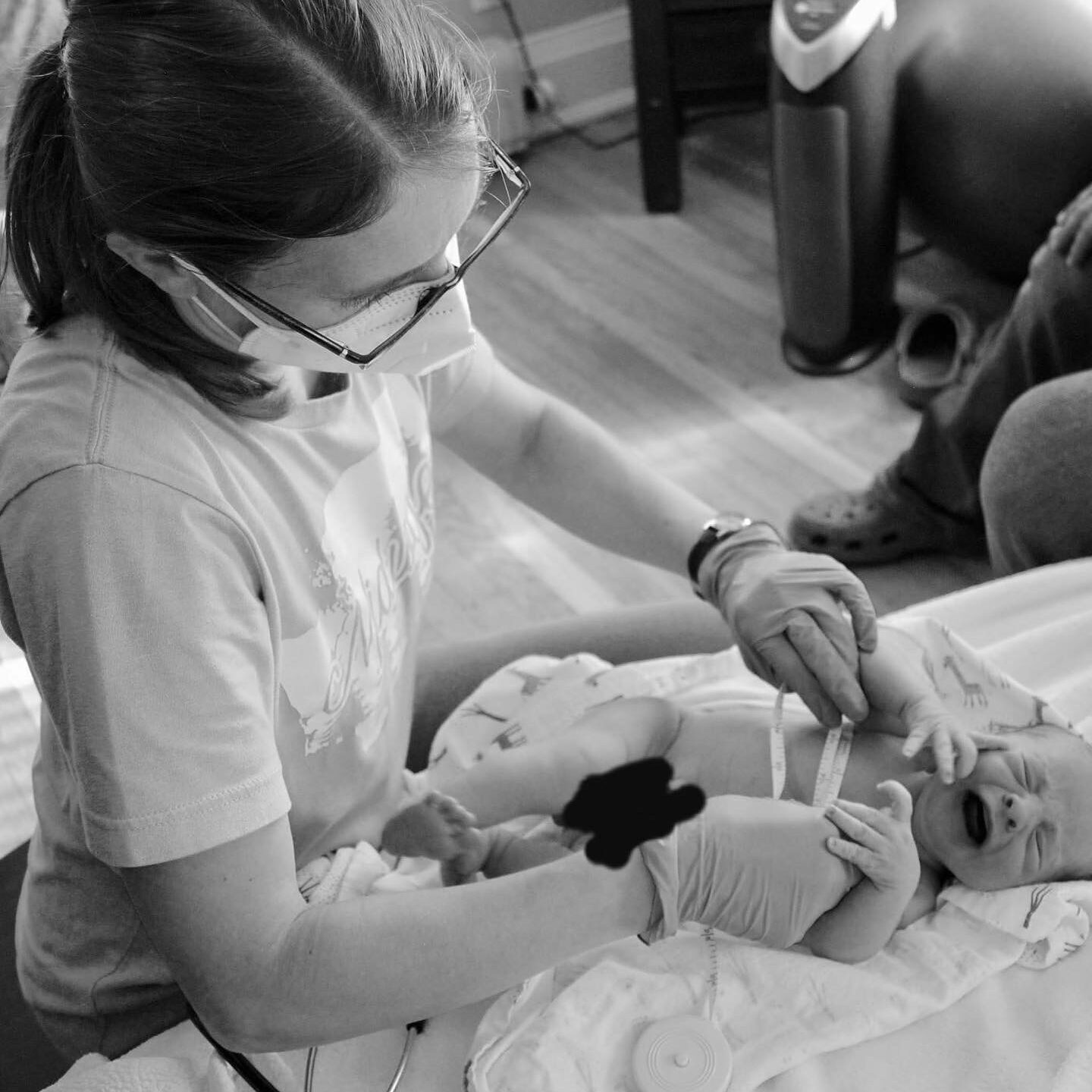
As long as everything is going well, we allow you to go home earlier than in a hospital setting. This way, you can have a good meal and a thorough rest in your own space and introduce your brand new human to other family members and / or your pets. A big part of why this early release option is safe is because midwives come to your home for a postpartum visit 24-48 hours after birth – yes, you read that right. We bring the necessary equipment to make sure you and baby are doing well – simple things like a thermometer, BP cuff, stethoscope, baby scale, blood draw equipment in case it’s needed, and more high tech things like a pulse oximeter to check for heart defects in baby that can develop in those first hours after birth. We also do a heel poke to check for metabolic disorders that are serious if untreated. We also bring with us the relationship that has developed during the previous months and offer gentle guidance through the huge transition of becoming or growing a family. And just like during pregnancy and birth, that care is coming from someone who already knows your story.
After that first home visit, we stay in close contact, with additional visits or daily check-ins, especially in the first week, helping coordinate with a lactation consultant if needed.
This is a world apart from receiving no care after you leave the hospital until the six week check-up. Too often, emotional needs and physical changes are overlooked or minimized.
Continuity of care makes postpartum feel different. It feels like being seen, supported, and genuinely cared for in a way that truly honors this profound chapter of your life.
How Continuity of Care Impacts Outcomes
It’s not just about how it feels, research shows continuity of care improves birth outcomes. Families who receive consistent midwifery care are more likely to:
- Have vaginal births (rather than cesareans)
- Avoid unnecessary interventions (inductions, forceps, episiotomies)
- Experience higher satisfaction with their care
- Feel empowered and informed in their choices
- Have lower rates of preterm birth and complications
- Have more success breastfeeding
At its core, continuity of care is both evidence-based and heart-centered.
Our Commitment to Continuity at Bellingham Birth Center
We are proud to partner with our 5 independent midwifery practices who believe in continuity of care as deeply as we do. They provide this kind of care because this is just what midwives do ~ and it is better for the midwife too. It is far easier (and more fun) to get up in the night to sit with someone in the dark quiet hours when you know and care for that person.
This is what makes our birth center feel different. It’s what makes families feel held. And it’s one of the biggest reasons people tell us, “I couldn’t imagine giving birth any other way.”